Entry · Ref RUCODUN_
What an Energy Efficient Window Upgrade Really Means for Your Home
- Posted
- 2026-10-06
- Last amended
- 2026-10-06
- Account
- @i08oyy0jio
I have spent enough years working with windows to know that most homeowners only think about them when something goes wrong. A draft creeps in during a cold Texas morning, or a bedroom becomes too hot by noon even with the blinds drawn. The immediate reaction is usually to call for a repair or to start comparing prices online. But what many people miss is that a single smart change, like an energy efficient window upgrade, can solve several problems at once. It is not just about replacing old glass. It is about understanding how your windows actually work with the rest of your house.
Living in the Dallas-Fort Worth area means dealing with extreme temperature swings. Summers push triple digits and winters can drop below freezing for days at a time. Your heating and cooling system works hard to keep up, but if your windows are leaky or poorly insulated, that conditioned air escapes right outside. I have seen homes where the windows looked fine from the curb but failed every performance test once we checked for air leakage and thermal transfer. That is where the real conversation about window efficiency starts.
What Makes a Window Energy Efficient
A window is more than a piece of glass in a frame. It is a system of components that all affect how much heat moves in or out of your home. The three main factors are the glass itself, the gas between panes, and the frame material. When people ask me what to look for, I point them to the NFRC label first. The National Fenestration Rating Council gives you two numbers that matter most: the U-factor and the solar heat gain coefficient.
The U-factor measures how well the window insulates. A lower number means better insulation. In Texas, you want a U-factor around 0.30 or lower for most residential applications. The solar heat gain coefficient, or SHGC, tells you how much solar radiation passes through the glass. For our climate, a moderate SHGC is usually best, because you want to block summer heat but still let in some natural light during winter. Balancing these two ratings is where a professional can help you make the right call for your specific home orientation and window placement.

Low-E Glass and Argon Gas
One of the biggest advances in window technology over the last twenty years is low-E glass, which stands for low emissivity. A microscopically thin coating reflects infrared heat while letting visible light pass through. In summer it keeps interior heat from radiating outside, and in winter it reflects indoor heat back into the room. I have tested low-E coatings on homes across DFW and the difference in surface temperature of the glass can be as much as twenty degrees on a hot afternoon.
Pair low-E glass with Argon gas between the panes and you get a much better thermal break. Argon is denser than air and reduces convection inside the sealed unit, which means less heat transfer. Most double-pane windows today use Argon gas because it is cost effective and improves the overall U-factor noticeably. You will also see triple-pane windows in some high-end projects, but for most homes in our area, double-pane windows with low-E and Argon are the sweet spot for performance and cost.
Frame Materials and Thermal Performance
The frame is often overlooked, but it can be a major source of heat loss. Aluminum frames conduct heat very easily, which is why you see them more in commercial glass applications where structural strength matters more than insulation. For homes, vinyl windows have become the standard for good reason. Vinyl is a poor conductor of heat, so it naturally helps maintain the temperature inside. It also does not rot or corrode like wood, and it does not require painting. I have installed vinyl windows in homes built in the 1960s and the owners noticed an immediate drop in their energy bills that first summer.
If you are considering a whole-home replacement, vinyl frames with a thermal break are a reliable choice. The thermal break is a non-metallic barrier between the interior and exterior parts of the frame that stops heat from traveling through the metal. It is a small detail that makes a big difference in overall window insulation.
When to Upgrade versus Repair
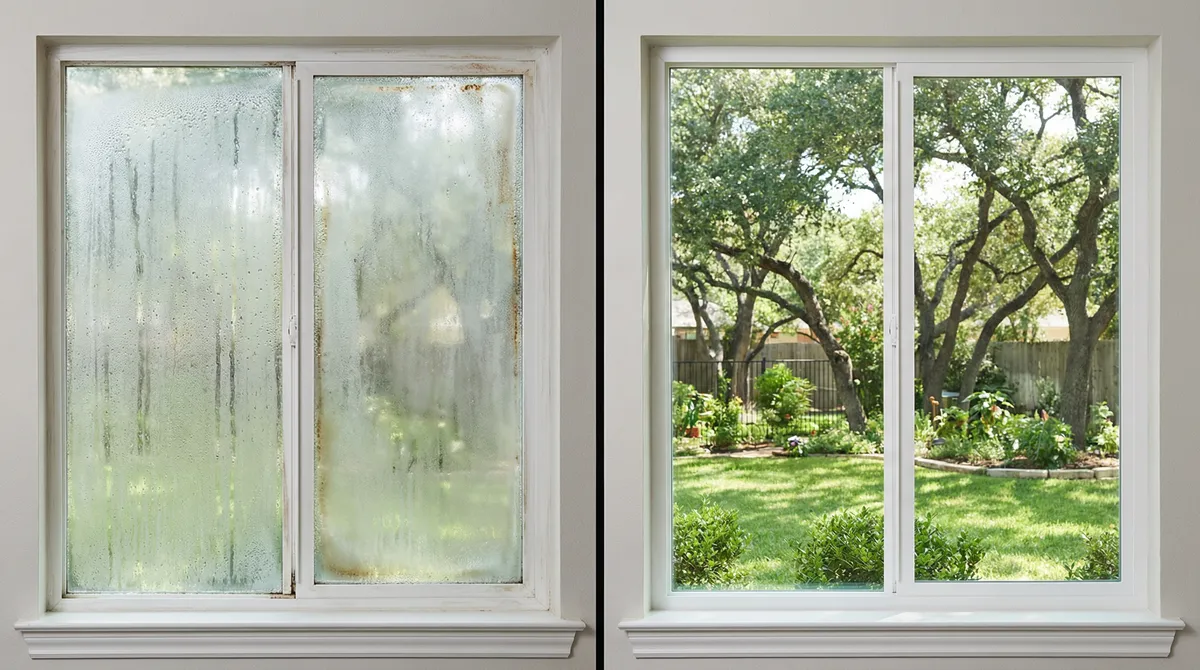
Not every window problem requires a full replacement. Foggy glass repair is a common service I handle, especially in homes with older double-pane windows. When the seal between the panes fails, moisture gets in and creates that cloudy look you cannot wipe away. That is a glass seal failure, and it means the insulating gas has leaked out. In that situation, replacing just the glass unit is often more practical than tearing out the whole window, as long as the frame is still in good shape.
But if your windows are single-pane, or if the frames are warped or rotting, then a partial repair is just delaying the inevitable. An energy efficient window upgrade becomes the smarter investment because you gain better insulation, lower energy costs, and improved comfort. I have been in homes where the owner spent hundreds on weatherstripping and caulk only to still feel a draft. That money would have been better put toward new windows that actually seal properly.
Energy Star and Texas Energy Code
Energy Star certification is a helpful benchmark when shopping for windows. It means the product meets strict efficiency guidelines set by the EPA. But Energy Star ratings are national, and Texas has its own energy code that can be more specific to our climate zone. The Texas energy code requires certain U-factor and SHGC levels for new construction and major renovations. If you are doing a whole-home replacement, your installer should be familiar with these requirements and make sure your new windows comply. I always recommend asking for a NFRC label on any window you are considering. It gives you the actual tested numbers, not just a sticker.
Commercial Glass and Impact-Resistant Options
For commercial properties, the stakes are different. You need windows that meet building codes for safety, fire egress, and sometimes blast resistance. Commercial glass often uses thicker panes and tempered or laminated materials. Impact-resistant glass is becoming more common in retail and office buildings because it stands up to weather and vandalism better. The same energy efficiency principles apply, but the installation and framing are usually more complex. If you manage a commercial building in DFW, an energy efficient window upgrade can reduce your HVAC load significantly, and the payback period is often shorter than you would expect because of the square footage involved.
Getting a Free Estimate and Understanding the Warranty
Before you commit to any window project, get a free estimate from a company that does both residential and commercial work. A good estimator will walk your property, check the existing windows for air leaks and glass seal failure, and give you a clear breakdown of options. They should also explain the window warranty that comes with the product and the installation. A strong warranty covers not just the glass and frame but also the labor if something goes wrong. I have seen too many homeowners buy cheap windows with a five-year warranty only to deal with seal failures a few years later.
A solid window warranty from a reputable installer gives you peace of mind. It should cover the insulated glass unit against seal failure for at least ten years, and the frame and finish for a similar period. Ask about transferability too, because that can add resale value to your home. If you ever sell, a buyer will see that the windows are under warranty and that is a real selling point.
Practical Advice for Homeowners
If you are on the fence about whether to proceed with an energy efficient window upgrade, start with a simple test. On a windy day, hold a candle or a lighter near the edges of your window frames. If the flame flickers, you have air leakage. Also check for condensation between panes, which is a clear sign of seal failure. And look at your energy bills for the last twelve months. If they are climbing even though your usage has not changed, your windows could be the culprit.

I have done this work for long enough to know that every home is different. A south-facing window gets different solar exposure than a north-facing one. A home with lots of old single-pane windows will see a bigger improvement from replacement than a home that already has double-pane windows in decent shape. That is why I always recommend getting a professional assessment before making a decision. A free estimate costs nothing and gives you real data to work with.
Final Thoughts
Windows are a long-term investment in your home's comfort and efficiency. An energy efficient window upgrade is one of those improvements that pays for itself over time through lower utility bills and fewer drafts. But it only works if you choose the right products for your climate and your home's specific needs. Low-E glass, Argon gas, vinyl frames with a thermal break, and proper installation all matter. So do the NFRC ratings and the warranty. Take the time to understand what you are buying, and do not be afraid to ask questions. The right windows will make your home more comfortable year round, and that is something you will notice every single day.